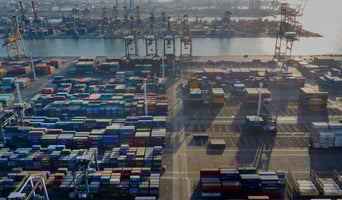
Across ports, depots, and intermodal hubs, operations teams are being asked to do more, faster. Yet...

Introduction: The Cost of Being Reactive in Road Freight
The haulage industry is undergoing a profound digital shift. Where success once depended on driver experience, clipboard manifests, and gut-feel dispatching, today it hinges on the quality of your data, and how fast you can act on it.
Yet for many mid-sized carriers, visibility remains fragmented. Dispatchers still juggle separate tools for planning, tracking, and reporting. Fleet managers learn about disruptions only after they’ve escalated. Customers call asking for updates before dispatch even knows there’s a delay.
In this climate, operating without real-time data is no longer just inefficient, it’s a competitive liability.
Why Real-Time Visibility Matters More Than Ever
1. Service Levels Are Higher and Less Forgiving
Today’s shippers and end customers expect transparent, timely delivery updates. If a shipment is delayed by traffic or mechanical issues, they want to know immediately, not hours later.
When logistics directors can’t provide accurate ETAs or proof of issue resolution, customer trust erodes. Real-time visibility empowers proactive communication that builds confidence and repeat business.
2. The Cost of Manual Coordination Is Rising
Without a centralized, real-time system, dispatchers spend their day chasing information: calling drivers, updating spreadsheets, checking third-party telematics apps, and trying to piece together the full picture.
This administrative burden isn’t just time-consuming, it introduces errors, delays decision-making, and leads to costly mistakes such as misrouted trucks, missed time slots, or redundant trips.
3. Fleets Are Under Pressure to Do More with Less
Driver shortages, volatile fuel prices, and tight margins mean every kilometer counts. Without live insight into fleet locations, delays, and driver availability, optimization is guesswork.
Hauliers that use real-time tools to dynamically reassign jobs, reroute vehicles, and proactively address issues outperform those locked into static daily plans.
What Real-Time Visibility Actually Looks Like
In modern haulage operations, real-time visibility encompasses more than just tracking vehicle locations. It involves a comprehensive, integrated system that provides actionable insights and seamless communication across all facets of transport management. Here's how such a system functions:
-
Centralized Information Access: All stakeholders, dispatchers, drivers, and management can access up-to-date transport data through both web interfaces and mobile applications. This ensures that everyone is informed and aligned, regardless of their location.
-
Integrated Communication Tools: Built-in messaging and notification features facilitate direct communication between drivers and dispatchers. This integration eliminates the need for separate communication channels, reducing delays and misunderstandings.
-
Real-Time Status Updates: The system provides live updates on delivery statuses, including confirmations, delays, and issues encountered en route. This immediacy allows for prompt decision-making and customer notifications.
-
Automated Time Tracking: Drivers' working hours and activities are automatically recorded, simplifying compliance with labor regulations and streamlining payroll processes.
-
Seamless System Integration: The transport management system integrates with existing enterprise resource planning (ERP) and financial systems, ensuring that data flows smoothly across all business operations without the need for manual data entry.
-
Data Reusability: Information entered into the system is stored and can be reused for future transport orders, reducing redundancy and improving efficiency.
-
Comprehensive Administrative Oversight: Management has access to dashboards and reports that provide insights into operational performance, resource utilization, and areas for improvement.
By implementing such a system, haulage companies can transition from reactive to proactive operations, enhancing efficiency, reducing costs, and improving customer satisfaction.
What Happens When You Don’t Have It
Companies operating without real-time visibility suffer from:
-
Delayed disruption response – Problems escalate before the right person notices.
-
Manual rework – Changes to routes or deliveries require several calls and manual updates across tools.
-
Low fleet utilization – Empty runs and underused capacity are common due to lack of up-to-date vehicle status.
-
Driver frustration – Repeating information, unclear routing, and constant calls create unnecessary stress.
-
Compliance risk – Without digital proof and time stamps, audit trails are vulnerable.
Logistics Directors know that inefficiency isn’t just an operational concern, it’s a strategic one that impacts profitability and growth.
What to Look for in a Real-Time TMS
Choosing a transport management system that offers true real-time visibility isn’t just about ticking boxes. Look for:
-
Unified platform architecture: Planning, tracking, and communication should live in the same system, not across four vendors.
-
Mobile-first tools: Drivers should be able to report issues, confirm deliveries, and receive new routes via rugged mobile apps, designed for on-the-go use.
-
Scalability: Can the system handle growth, cross-border complexity, or regulatory changes?
-
Data-driven alerts: Systems should surface issues, not bury them in raw data.
-
Open integration: The platform should talk to your existing ERP, invoicing, and telematics systems without custom coding.
Real-Time in Action: A Common Scenario
Imagine a vehicle breaks down mid-route. In a legacy setup, the driver calls dispatch. Dispatch calls another driver, checks spreadsheets to find one with capacity, and relays directions manually. Meanwhile, the customer is unaware of the delay until it’s too late.
With a modern, real-time TMS, the system detects the delay, flags the route deviation, and surfaces nearby drivers with capacity. Dispatch can reassign the delivery instantly. The customer is notified via automatic update. The result? The delivery is made on time, and no one had to panic.
Why Now?
The competitive landscape in 2025 demands faster decision-making, better service, and leaner operations. But none of that is possible without a real-time foundation.
Many hauliers delay adopting modern systems because they’re wary of disruption or unsure of ROI. But the truth is: the cost of staying reactive is already higher than the cost of upgrading.
As regulations tighten, costs rise, and customers demand more, real-time visibility becomes the baseline, not the differentiator.
Conclusion: The Future Moves Fast. Will You?
If your fleet is still operating on static plans, disconnected systems, and after-the-fact updates, you’re not just behind, you’re at risk.
A modern TMS built for real-time transport management unifies planning, execution, and communication, keeping your fleet agile, your team informed, and your customers satisfied.
The question isn’t whether you can afford to modernize. It’s whether you can afford not to.
Learn how a unified TMS delivers real-time visibility that keeps your operations moving forward:
Let’s make you proactive.