
Introduction: The Challenge of Operational Blind Spots In today’s high-traffic logistics hubs,...

The Visibility Gap in Modern Nordic Warehousing
Warehouse operations across the Nordics are facing unprecedented pressure. The region’s logistics sector is growing rapidly, with higher customer expectations, tighter delivery windows, and increasing complexity in multimodal transport. Yet, many warehouse teams still rely on a patchwork of spreadsheets, manual checklists, and legacy systems. This fragmented approach leaves operational leaders without the real-time visibility needed to make fast, informed decisions.
For warehouse directors and operational stakeholders, the consequences are tangible. When you lack immediate insight into inventory status, dock activity, or inbound congestion, you risk delays, bottlenecks, and costly errors. In a landscape where throughput, accuracy, and agility are critical, the absence of real-time data becomes a strategic liability.
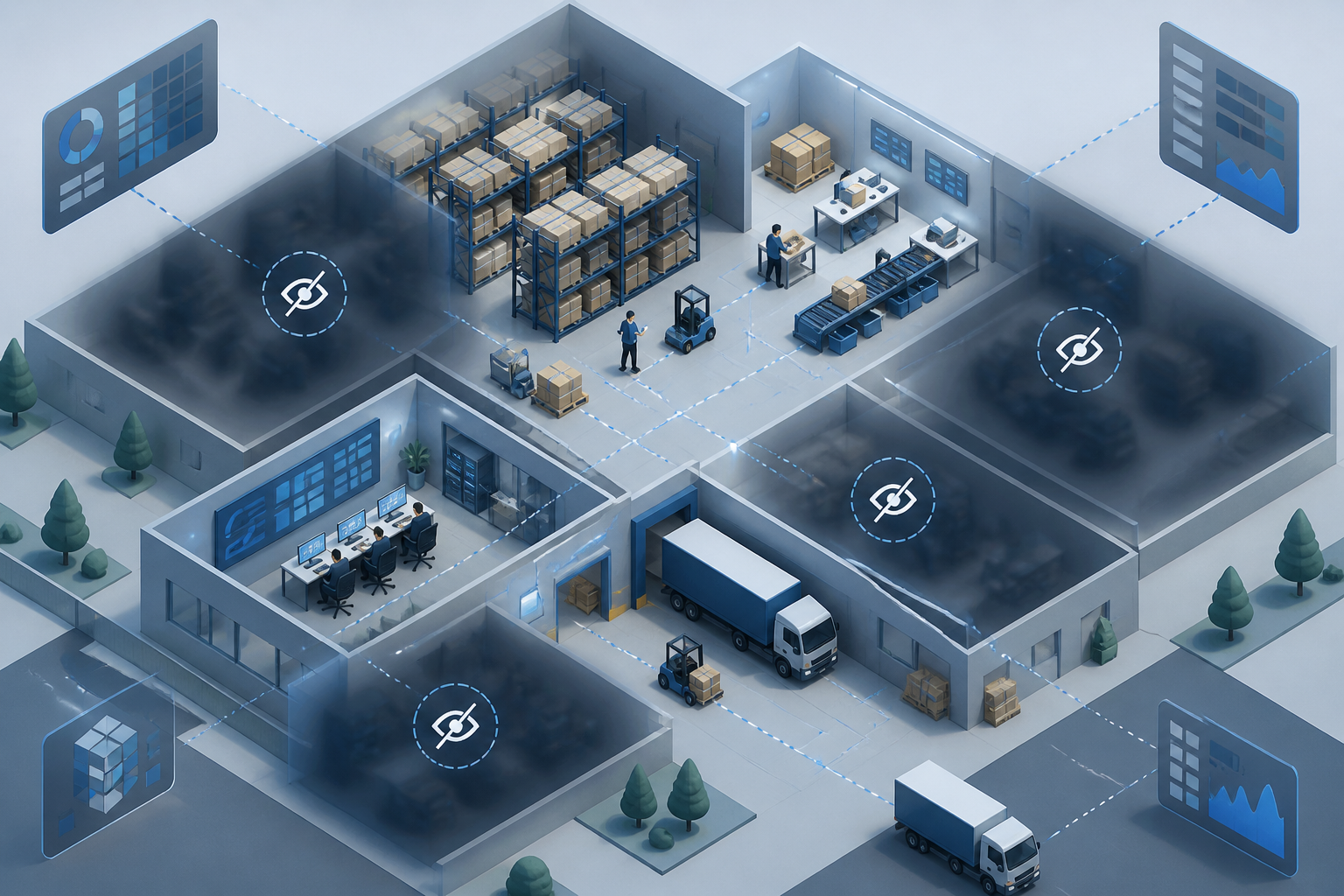
Operational Risks of Limited Real-Time Insights
The challenges of limited visibility extend far beyond day-to-day frustrations. Without a unified, real-time view of warehouse activities and inventory, several operational risks emerge:
- Inventory Inaccuracies: Manual tracking and delayed updates lead to misplaced or lost items, impacting customer satisfaction and increasing downstream costs.
- Bottlenecks and Delays: Poor coordination between warehouse and transport teams causes trucks to wait, loading/unloading times to rise, and overall throughput to suffer.
- Inefficient Space Utilization: Without live data on storage capacity and movement, warehouses struggle to optimize layouts and respond to fluctuating volumes.
- Scaling Challenges: As business grows, manual processes and fragmented systems become unsustainable, requiring more headcount just to keep up.
These risks are especially acute during peak periods, when every minute counts. Operational leaders need to detect congestion, reallocate teams, and adjust plans on the fly. Relying on after-the-fact reports or staff intuition is no longer enough.

How Real-Time Warehouse Management Transforms Performance
The next step for Nordic warehouses is clear: embrace real-time visibility as a foundation for operational excellence. Modern Warehouse Management Systems (WMS) are designed to provide live, actionable insights into every aspect of warehouse activity. This shift delivers measurable improvements across key performance areas:
- Boosted Throughput: With live tracking of inbound and outbound flows, teams can quickly identify and resolve slowdowns, keeping goods moving efficiently.
- Improved Inventory Accuracy: Automated scanning and real-time updates ensure that digital records always match physical inventory, reducing costly discrepancies.
- Faster Turnaround Times: Real-time dock management and integration with transport schedules enable dynamic assignment and rapid response to delays.
- Reduced Manual Work: Automated activity tracking and reporting eliminate the need for spreadsheets and paper checklists, freeing staff to focus on value-adding tasks.
- Actionable Analytics: Continuous data collection powers dashboards and reports that highlight bottlenecks, error-prone workflows, and opportunities for process improvement.
By moving from reactive to proactive management, warehouse leaders can drive continuous improvement, support business growth, and deliver superior service to customers and partners.
Key Capabilities: What to Look for in a Modern WMS
Not all warehouse management solutions are created equal. To truly unlock the benefits of real-time visibility, operational stakeholders should look for systems that offer:
- Live Inventory and Activity Tracking: Immediate updates on every goods movement, from receiving to storage to outbound shipment.
- Integrated Activity Reporting: Automated capture of all warehouse actions, with customizable dashboards for both floor teams and management.
- Seamless Integration: Ability to connect with transport management, terminal operating systems, and enterprise platforms for end-to-end visibility.
- User-Friendly Interfaces: Tools that are intuitive for operational staff, supporting rapid adoption and minimizing training time.
- Scalability and Flexibility: Systems that can adapt to new workflows, increased volumes, and evolving business needs without costly overhauls.
- Mobile Support: Real-time access for staff on the warehouse floor, enabling immediate data capture and issue resolution.
These features are not just nice-to-haves, they are essential for any warehouse aiming to remain competitive in the fast-evolving Nordic logistics landscape.
PICit’s Approach: Real-Time Visibility for Sustainable Growth
PICit A/S understands the unique challenges faced by Nordic warehouse operations. The Cargo Freight Station / Warehouse Management System (WMS) is purpose-built to provide full visibility into warehouse activities, streamline cargo consolidation and deconsolidation, and reduce manual tracking errors. By integrating with the broader PICit transport community platform, the WMS ensures that warehouse, transport, and terminal operations are always aligned.
Key benefits of PICit’s WMS include:
- Real-Time Inventory Management: Every item is tracked as it moves through the warehouse, supporting 99% inventory accuracy and minimizing lost or misplaced goods.
- Activity Tracking and Reporting: Automated logs of all warehouse actions provide actionable data for performance improvement and compliance.
- Integration with Logistics Systems: Seamless connections to Terminal Operating System (TOS) and other PICit solutions enable end-to-end process visibility.
- Reduced Manual Errors: By eliminating spreadsheets and manual checklists, the system reduces admin time and supports faster, more reliable operations.
- Scalable for Growth: The WMS adapts as business volumes increase, supporting continuous improvement without the need for additional headcount.
PICit’s solutions are already trusted by leading operators across Scandinavia, delivering measurable ROI and supporting the region’s most demanding logistics environments.
Conclusion: Building the Agile, Data-Driven Warehouse
The future of Nordic warehousing depends on the ability to see, understand, and act in real time. Operational leaders who embrace digitalization and real-time visibility are better positioned to boost throughput, improve accuracy, and respond with agility to changing demands. By moving beyond manual processes and fragmented systems, warehouses can become true engines of supply chain performance.
PICit A/S stands ready to support this transformation. With proven, secure, and integrated solutions, warehouse teams can close the visibility gap and build operations that are not just efficient, but resilient and future-ready.
For those seeking to lead the next era of Nordic logistics, real-time warehouse visibility is not just an upgrade, it is the essential next step.