

Key takeaways
• A single missed update can lead to delayed deliveries, wasted driver hours, compliance errors, and unhappy customers.
• Phone calls, SMS, spreadsheets, and legacy software are slow, error-prone, and hard to scale during peak periods.
• A transport management system (TMS) such as PICit’s TOMS gives dispatchers, drivers, and administration the same real-time data.
• Less time on the phone means more time for planning and for handling disruptions.
The Rising Stakes of Dispatch Communication
Dispatch is where road freight operations are coordinated, and every minute counts. The ability to communicate quickly and clearly with drivers, customers, and internal teams has become a necessity. As customer expectations for on-time delivery and real-time updates continue to rise, logistics teams face mounting pressure to ensure that every message, update, and instruction is delivered without delay or confusion.
Dispatch communication is the flow of instructions, status updates, and changes between dispatchers, drivers, customers, and internal teams during the transport day.
For operational stakeholders, the challenge is not just about moving goods from point A to point B. It is about coordinating routes, resources, and schedules, all while adapting to last-minute changes and disruptions. In this context, communication becomes the critical link that keeps operations running smoothly, or, when it fails, brings them to a standstill.
In this article, PICit A/S, based in Aarhus, Denmark, looks at what missed updates cost, why traditional tools fall short, and how a transport management system helps dispatch teams communicate faster and more accurately.

What Do Missed Updates Cost Logistics Companies?
Missed updates cost logistics companies time, money, and customer trust. They are more than minor inconveniences. In logistics, a single missed message can trigger a chain reaction: delayed deliveries, wasted driver hours, compliance errors, and unhappy customers. When dispatchers rely on manual phone calls, scattered emails, or fragmented messaging apps, the risk of information slipping through the cracks increases.
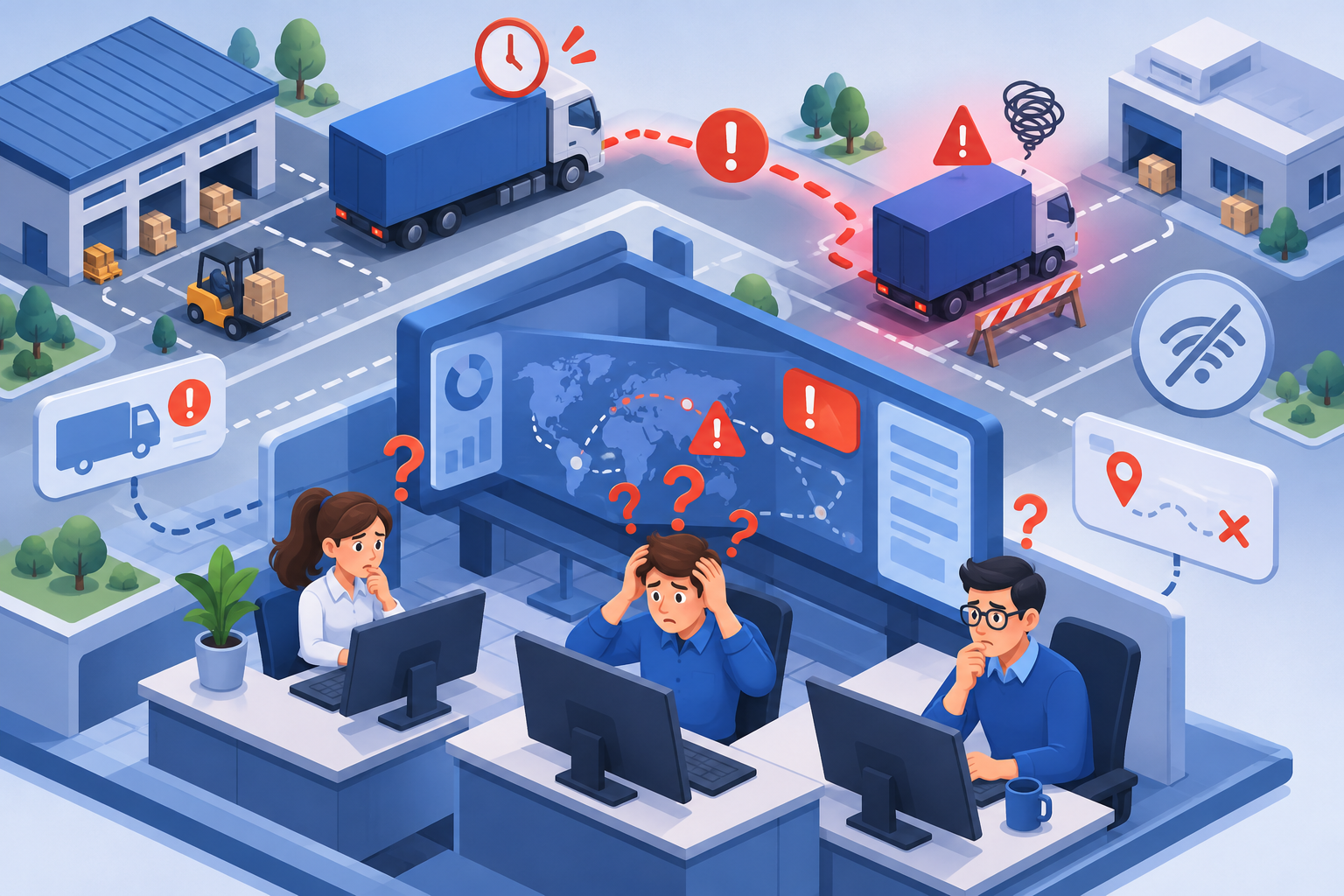
Consider the daily reality for many logistics teams. A traffic jam forces a driver to reroute, but the update is delayed by a manual call. The dispatcher, juggling multiple screens and urgent notifications, misses the message. As a result, the customer is not informed, and the delivery window is missed. Multiply this scenario across dozens of trucks and hundreds of deliveries, and the cumulative effect on operational efficiency and customer satisfaction becomes clear.
The financial implications are equally significant. Missed updates often lead to:
• Increased overtime and operational costs due to reactive problem-solving
• Inefficient use of resources, as trucks and drivers wait for instructions
• Higher risk of compliance breaches when critical information is not communicated promptly
• Damage to customer relationships and reputation
Why Do Traditional Dispatch Tools Fall Short?
Traditional tools fall short because information is spread across calls, messages, and spreadsheets that nobody can see in one place. Despite advances in transport management systems, many dispatch teams still rely on a patchwork of tools: phone calls, SMS, spreadsheets, and legacy software. These manual processes are slow, error-prone, and difficult to scale. During peak periods, the pressure intensifies, and the likelihood of missed updates grows.
Operational stakeholders face several persistent challenges:
• Limited real-time visibility into job status and delivery progress
• Heavy reliance on manual coordination, leading to bottlenecks and stress
• Fragmented data across multiple systems, making it hard to get a complete operational picture
• Frequent plan adjustments due to traffic, customer changes, or unforeseen events
These challenges not only increase day-to-day stress but also make it difficult to optimize resources and maintain high on-time delivery rates. The result is a reactive, firefighting approach that leaves little room for proactive planning or process improvement.
How PICit’s TOMS Improves Dispatch Communication
To meet these demands, dispatch teams need more than small fixes. They need one shared system for transport orders and updates. PICit’s Transport Order Management System (TOMS) is a transport management system (TMS) designed for hauliers, transport, and logistics companies, with real-time access via web and the PICmobile app.
TOMS replaces fragmented, manual workflows by bringing transport orders, driver dispatch, time registration, documentation, and invoicing together in one system. Key benefits include:
• Real-time operational visibility: Transport order creation, assignment, tracking, and status updates are centralized, so dispatchers can follow order status without manual check-ins and status calls.
• Live updates for drivers: Drivers access personal job lists, mobile documentation, and live updates via PICmobile, including job updates, time tracking, and photo capture.
• Shared real-time data: Everyone involved in transport operations sees the same real-time data, which reduces the risk of missed information.
• Integration with existing systems: TOMS integrates with existing platforms to reuse data across systems, reducing manual work and improving data accuracy.
By centralizing orders and updates in one system, dispatchers can focus on higher-value tasks: planning, optimizing, and responding proactively to disruptions. PICit’s customers report up to 80% time savings per transport job after switching from Excel-based workflows to TOMS.
Building a Resilient, Real-Time Dispatch Workflow
The transition to integrated communication tools is not just about technology. It is about building a more resilient and efficient operation. For logistics teams, this means:
• Reducing manual coordination time: With live updates and shared real-time data, dispatchers spend less time on the phone and more time on planning.
• Enhancing team collaboration: Integrated platforms break down silos between dispatch, drivers, and administration, so everyone works from the same information.
• Improving response times: When disruptions occur, dispatchers can act quickly and confidently, updating plans and sharing changes without a round of phone calls.
• Lowering operational stress: By reducing the constant firefighting caused by missed updates, teams can operate more smoothly, even during peak periods.
The result is a dispatch operation that is not only faster and more accurate but also more adaptable to the changing demands of the logistics industry.
Setting the New Standard for Logistics Teams
Fast, accurate communication is no longer optional for logistics dispatch centers. It is the new standard. As industry trends push for greater speed, transparency, and reliability, the cost of missed updates continues to rise. Operational stakeholders who adopt integrated solutions like PICit’s Transport Order Management System (TOMS) position their teams for success: reducing manual workload, improving visibility, and delivering the level of service that customers now expect.
For logistics teams ready to move beyond the limitations of traditional tools, the path forward is clear. The future belongs to those who can communicate quickly, act decisively, and keep every delivery on track, no matter what the day brings.
Want to see how TOMS could support your dispatch team? Book a demo with PICit.
Related reading: From Office to Road: Bridging the Transport Execution Gap · Why Real-Time Visibility is Critical for Modern Haulage · The Hidden Costs of Manual Communication in Terminal Operations
Frequently Asked Questions
What is dispatch communication?
Dispatch communication is the flow of instructions, status updates, and changes between dispatchers, drivers, customers, and internal teams during the transport day.
What does a missed update cost a logistics company?
Missed updates can lead to overtime and higher operational costs, trucks and drivers waiting for instructions, a higher risk of compliance breaches, and damaged customer relationships.
Why are phone calls and spreadsheets not enough for dispatch?
They are slow, error-prone, and difficult to scale. Information ends up spread across calls, messages, and files, so nobody has a complete picture, especially during peak periods.
How does PICit’s TOMS support dispatch teams?
TOMS centralizes transport order creation, assignment, tracking, and status updates, and gives everyone involved the same real-time data. Drivers get job lists and live updates in the PICmobile app.
Can drivers use TOMS on their phones?
Yes. Drivers use the PICmobile app to see their job lists, receive live updates, register time, and add documentation and photos.