
Introduction: When Speed Overshadows Precision In modern warehouse operations, performance is often...
In warehouse operations, problems rarely start big.
They usually begin as something small — a missed scan, a delayed task, or a minor miscommunication. Individually, these issues seem manageable and easy to fix.
But in a connected environment like a warehouse, small errors rarely stay isolated.
Over time, they can develop into larger operational challenges that impact efficiency, flow, and overall performance.
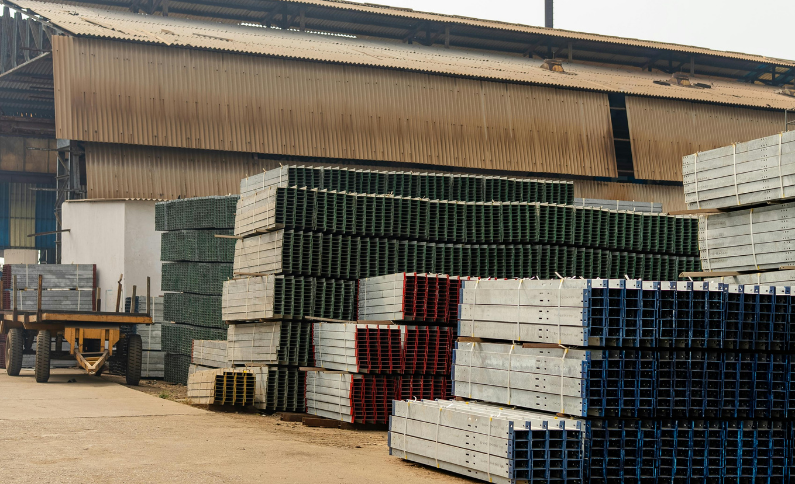
The reality of connected warehouse workflows
Warehouse operations are built on a sequence of tasks that depend on each other.
Picking depends on inventory accuracy.
Packing depends on picking.
Shipping depends on both.
Because of this, even a small issue in one step can affect everything that follows.
For example, a delayed picking task may seem insignificant in the moment. But it can quickly lead to downstream delays, changes in priorities, and increased pressure on the team.
This is what makes warehouse operations particularly sensitive to small disruptions.
How small errors escalate over time
The real challenge is not the error itself — it is how it spreads.
When a small mistake occurs, it often triggers a chain of adjustments:
- Tasks need to be reprioritised
- Teams must react to new conditions
- Manual decisions increase
These adjustments may solve the immediate issue, but they introduce variability into the workflow.
As more of these situations occur, the operation becomes less predictable and harder to manage.
What started as a small issue can gradually turn into a broader operational problem.
The hidden cost of “fixing as you go”
In many warehouses, small issues are handled quickly and locally.
Teams fix problems as they arise and move on.
While this approach keeps operations running, it has a downside.
When problems are only addressed in the moment:
- The root cause is not resolved
- The same errors tend to repeat
- Workflows become inconsistent
Over time, this creates inefficiencies that are difficult to identify and measure.
The operation may appear to be functioning — but with unnecessary friction.
Why reducing errors is about more than accuracy
It is easy to think of warehouse errors as isolated mistakes.
But in reality, they are often symptoms of underlying issues.
These can include:
- Unclear processes
- Lack of prioritization
- Limited visibility across operations
Reducing errors is therefore not just about improving accuracy.
It is about improving how the entire operation works.
What efficient warehouse operations do differently
Warehouses that handle errors effectively are not necessarily error-free.
Instead, they are structured in a way that limits how far errors can spread.
This typically involves:
Clear and consistent workflows
When tasks are well-defined, there is less variation in how they are executed.
Better visibility across operations
Teams can identify issues earlier and respond before they escalate.
Reduced reliance on manual adjustments
Fewer ad hoc decisions lead to more stable operations.
Strong alignment across teams
Everyone works from the same priorities and information.
Together, these elements create a more resilient operation.
From reactive to controlled operations
The difference between reactive and controlled operations is how errors are handled.
In reactive environments, teams constantly respond to issues as they occur.
In controlled environments, workflows are designed to absorb and limit disruptions.
This shift does not eliminate errors — but it reduces their impact.
And that is what improves performance over time.
Small errors are a signal — not just a problem
Small errors should not only be seen as something to fix.
They are also signals.
They point to areas where processes, communication, or workflows can be improved.
By paying attention to these signals, warehouses can:
- Identify recurring issues
- Improve consistency
- Strengthen overall operations
Building more resilient warehouse operations
Warehouse operations will always involve complexity.
Mistakes will happen.
But when workflows are structured and supported by clear processes and visibility, small errors are less likely to grow into larger problems.
Efficiency is not about eliminating every mistake.
It is about preventing small issues from disrupting the entire operation.
Request a demo or read more about PICit WMS
.png?height=200&name=Article%20(2).png)