Introduction: A Constant Trade-Off Dispatch is the nerve center of every transport operation....

Why Fragmented Dispatch Tools Hold Teams Back
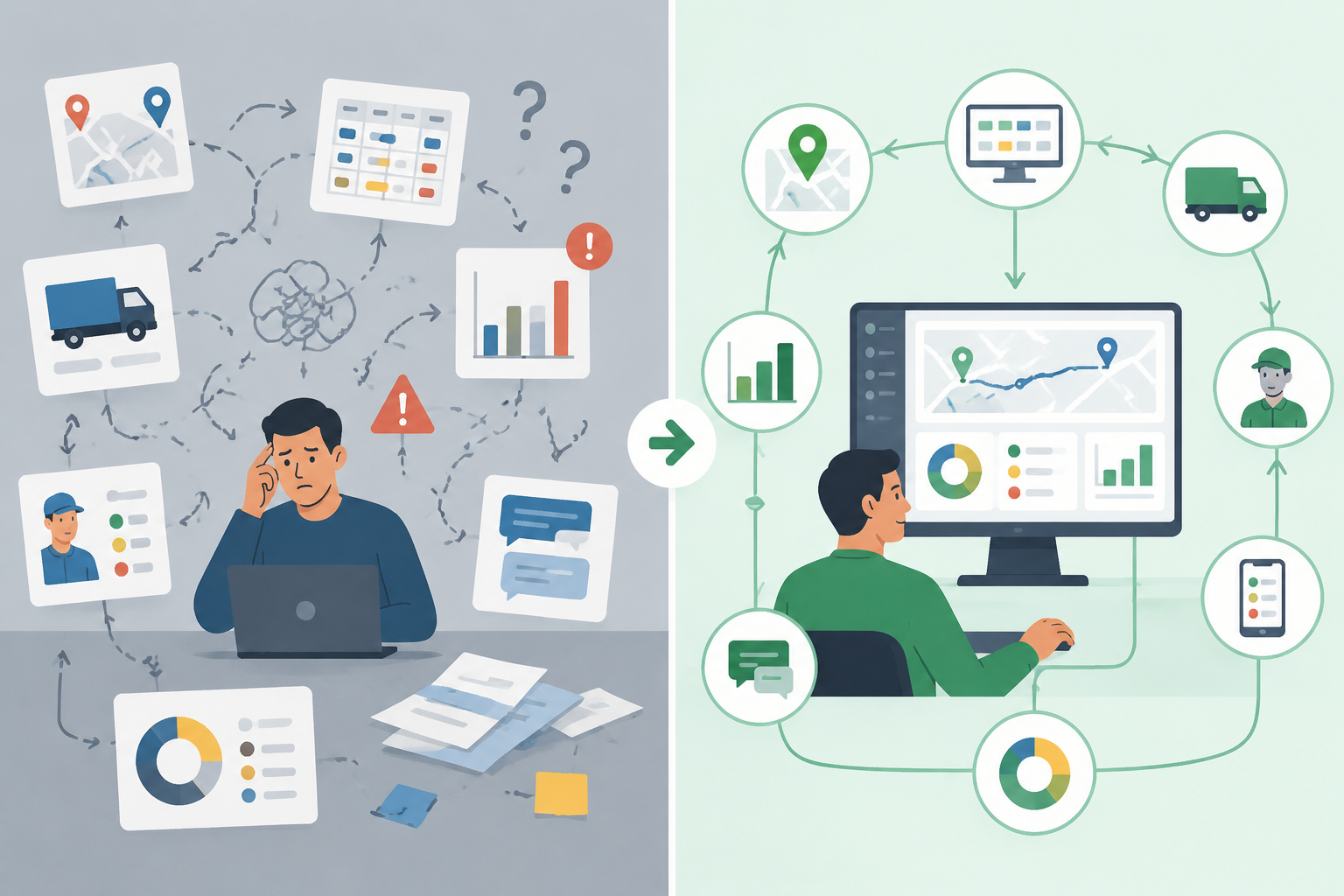
In today’s fast-paced transport and logistics sector, dispatch teams are the nerve center of every successful operation. Yet, many organizations still rely on a patchwork of disconnected tools, spreadsheets, phone calls, messaging apps, and legacy systems, to manage daily planning and coordination. This fragmentation creates a host of challenges: limited real-time visibility, duplicated data entry, missed updates, and constant firefighting when disruptions strike.
Operational stakeholders, especially those responsible for dispatch, often find themselves juggling multiple screens and communication channels just to keep deliveries on track. When information is scattered across different platforms, even the most experienced teams struggle to react quickly to last-minute changes or unexpected delays. The result is increased stress, wasted time, and a higher risk of costly errors.
The Power of Integration: Unifying Transport Workflows
Integrated transport management systems offer a way out of this daily chaos. By consolidating fragmented dispatch tools into a single, unified SaaS platform, teams gain a real-time, end-to-end view of all ongoing deliveries, driver statuses, and resource availability. Instead of switching between applications or relying on manual updates, dispatchers can plan, monitor, and adjust routes from one central dashboard.
PICit A/S’s Transport Order Management System (TOMS) is designed specifically to address these pain points. It digitalizes the full transport workflow - from order creation to invoicing - and provides real-time access for both office staff and drivers. With seamless integration to other core systems like the Terminal Operating System (TOS) and Goods Transport System (GTS), TOMS ensures that information flows smoothly between dispatch, drivers, terminals, and customers.
This level of integration transforms the dispatcher’s role. Instead of reacting to problems as they arise, teams can anticipate issues, communicate instantly with drivers, and make informed decisions based on live data. The result is a more resilient, agile operation that can maintain high on-time delivery rates even when the unexpected happens.

Real-World Productivity Gains from Integrated Systems
The benefits of moving to an integrated transport management solution are both immediate and long-term. Dispatchers report significant reductions in manual coordination time—often cutting phone calls and rescheduling efforts by 30% or more. Real-time visibility into driver locations and delivery progress means fewer missed updates and less time spent chasing information.
Integrated systems like TOMS also streamline communication. Instead of relying on phone calls or messaging apps outside the main workflow, dispatchers and drivers can exchange updates, confirmations, and instructions within the same platform. This reduces the risk of miscommunication and ensures that everyone is working from the same, up-to-date information.
For organizations operating at scale, these gains add up quickly. Teams can handle higher order volumes without increasing headcount or overtime. Resource utilization improves as planners can optimize routes and assignments based on live data. Most importantly, operational stress decreases as the team shifts from reactive firefighting to proactive management.
Key Features to Look for in an Integrated Solution
Not all transport management systems deliver true integration. When evaluating solutions, operational leaders should look for platforms that:
- Provide real-time driver location and status updates accessible from any device
- Offer intuitive, quick-to-navigate planning and dispatch tools
- Enable integrated communication channels within the primary workflow
- Support seamless data exchange with terminals, warehouses, and customer systems
- Automate routine admin tasks, reducing manual data entry and errors
- Allow flexible adaptation to changing schedules and priorities
PICit’s TOMS, for example, includes digital order creation, real-time access via web and mobile app, administrative oversight, invoicing, and real-time notifications. Its integration with TOS and GTS extends visibility beyond the road fleet to include terminal and rail operations, supporting a truly end-to-end logistics workflow.
Building a Resilient, Productive Dispatch Operation
The shift to integrated transport management is not just about technology, it’s about empowering dispatch teams to work smarter, not harder. With a unified system in place, operational stakeholders can focus on what matters most: keeping deliveries on track, optimizing resources, and responding confidently to the inevitable disruptions of daily logistics.
By eliminating fragmented tools and manual workarounds, organizations build a foundation for sustainable productivity gains. Teams experience less day-to-day stress, planning becomes more efficient, and the entire operation becomes more resilient in the face of change.
For mid-sized freight carriers and logistics providers looking to stay competitive in a demanding market, the hidden value of integrated transport management systems is clear. It’s not just about streamlining workflows, it’s about unlocking the full potential of your dispatch operation and setting the stage for long-term success.