
Are you still managing shift decisions with whiteboards and written notes? Learn how real-time task...

Why Simplicity Matters in Warehouse Technology
In today’s fast-paced logistics environment, warehouse operations are under constant pressure to keep goods moving efficiently. Team leaders and operational stakeholders are tasked with maintaining uninterrupted flow, minimizing delays, and ensuring seamless coordination between warehouse and transport teams. Yet, the technology meant to support these goals often falls short, especially when it is overly complex or not designed for real-world use.
Simplicity in warehouse systems is not just a matter of preference. It is a strategic necessity. When technology is easy to use, it empowers teams to respond quickly to changing priorities, reduces the risk of errors, and supports a culture of continuous improvement. For those on the warehouse floor, practical tools that fit the daily workflow can make the difference between smooth operations and costly bottlenecks.
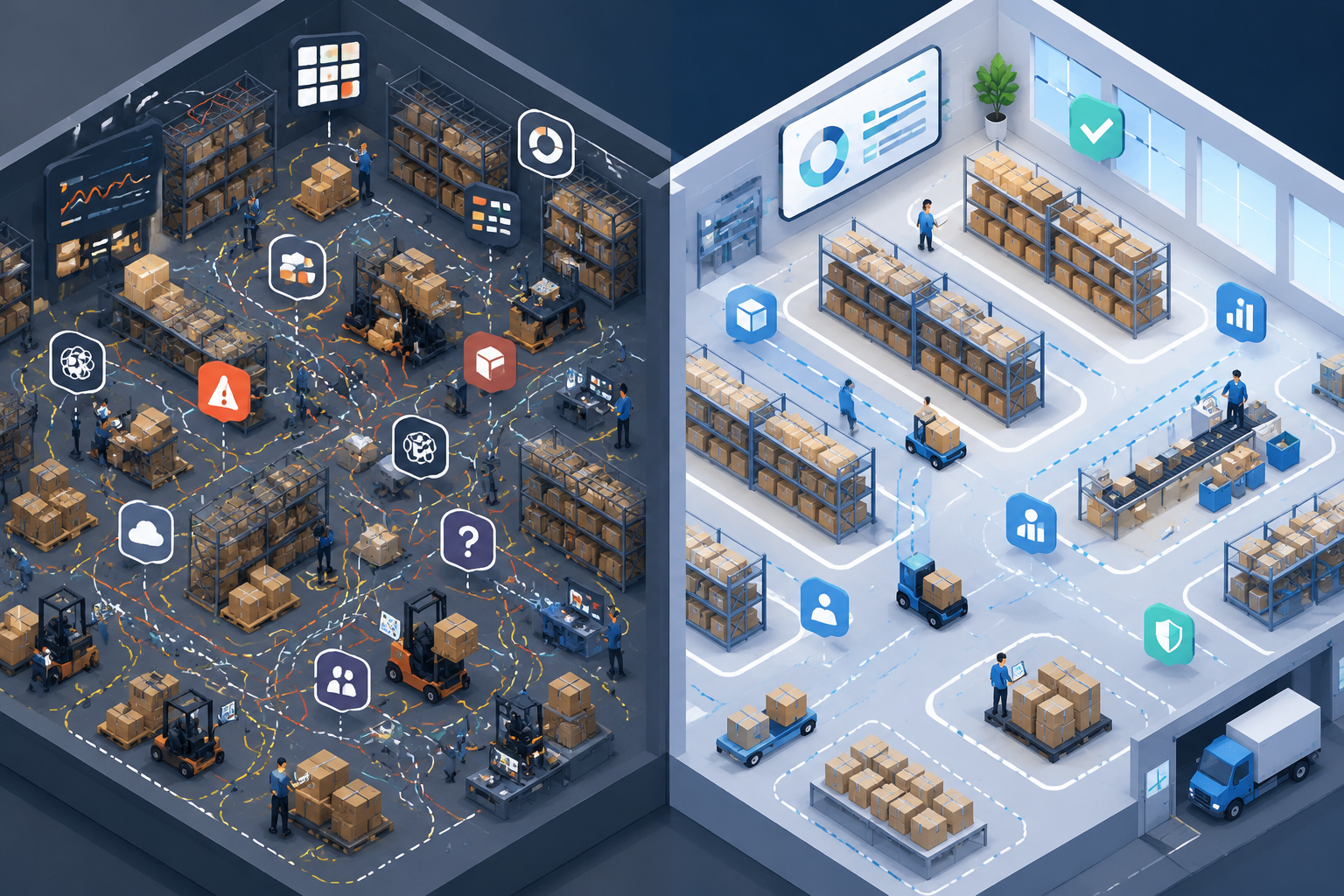
The Pitfalls of Complex Systems in Dynamic Logistics
Many logistics companies have experienced the challenges that come with adopting feature-heavy, complicated IT systems. While these platforms may promise comprehensive capabilities, they often introduce new pain points:
- Steep learning curves slow down onboarding and daily use, especially for teams with varying levels of digital experience.
- Cumbersome interfaces lead to more time spent navigating menus than managing goods.
- Lack of real-time visibility when systems are not intuitive or require manual updates, making it difficult to adapt to last-minute changes.
- Increased reliance on workarounds such as spreadsheets, whiteboards, or verbal instructions, which can undermine the very purpose of digitalization.
In dynamic logistics environments, where priorities shift rapidly and coordination is key, these issues can result in delays, miscommunications, and unnecessary stress for warehouse teams. The result is often a return to manual processes or partial adoption, negating the intended benefits of the investment.
How Practical Tools Drive Real-World Results
Operational leaders consistently report that simple, reliable tools outperform complex systems. Usable technology enables:
- Faster response to schedule changes by providing instant access to updated tasks and priorities.
- Stronger team alignment through clear, real-time communication and shared visibility.
- Reduced manual coordination by automating routine updates and minimizing paperwork.
- Improved morale and productivity as staff can focus on moving goods rather than wrestling with software.
For warehouse team leaders, these outcomes are not just nice-to-haves, they are essential for meeting performance targets and keeping operations running smoothly. A system that is easy to learn and use ensures that everyone, from new hires to experienced staff, can contribute effectively to daily goals.

Key Features of a Usable Warehouse Management System
When evaluating warehouse management solutions, operational stakeholders should prioritize features that directly support usability and real-world needs. The Cargo Freight Station / Warehouse Management System (WMS) from PICit A/S exemplifies this approach, offering:
- Real-time inventory management so teams always know what is in the warehouse and where it is located.
- Cargo storage and activity tracking for full visibility into ongoing tasks and upcoming priorities.
- Automated alerts and updates when transport schedules or delivery priorities change, reducing the risk of misalignment.
- Integration with logistics systems and terminal operations to ensure seamless handoffs between warehouse and transport teams.
- Mobile-friendly interfaces for easy access on the warehouse floor, supporting staff who are constantly on the move.
- Simplified reporting and billing to minimize administrative overhead and ensure accuracy.
These features are designed to replace fragmented, manual processes with a single, integrated platform that supports the way warehouse teams actually work.
PICit’s Approach: Usability and Reliability for Warehouse Teams
PICit A/S has built its reputation on delivering secure, reliable IT systems tailored to the logistics and transport industry. The focus is not on adding every possible feature, but on creating solutions that fit operational realities. The Cargo Freight Station / Warehouse Management System (WMS) is a prime example, providing:
- Full operational visibility to reduce bottlenecks and keep goods flowing.
- Streamlined workflows that eliminate manual tracking errors and reduce stress during peak periods.
- Responsive support and ISO27001-certified security, ensuring that critical operations are always protected.
By integrating with the broader PICit platform, including the Terminal Operating System (TOS) for port and terminal operations, warehouse teams benefit from a unified ecosystem that connects all stakeholders. This approach ensures that information is always available at the right place and time, supporting just-in-time deliveries and efficient cross-docking.
Making the Case for Simple, Impactful Technology
The logistics sector is evolving rapidly, but the core needs of warehouse operations remain the same: visibility, alignment, and the ability to adapt quickly. Overly complex systems can hinder these goals, while practical, easy-to-use tools can transform daily workflows and deliver measurable results.
When considering new warehouse technology, operational stakeholders should ask:
- Will this system make my team’s job easier or harder?
- Can it adapt to real-world changes without adding extra steps?
- Does it provide the visibility and communication needed to keep goods moving?
By choosing solutions like PICit’s Cargo Freight Station / Warehouse Management System (WMS), logistics companies can ensure that technology is an enabler - not a barrier - to operational excellence. Simplicity is not a compromise. It is the foundation for reliable, high-performing warehouse operations in today’s dynamic logistics environment.