
More data should lead to better decisions. At least, that’s the assumption. In transport...

Introduction: The Scalability Challenge in Nordic Warehousing
Warehouse operations across the Nordic region are under increasing pressure to handle higher volumes, tighter delivery windows, and rising customer expectations. Yet, for many operational stakeholders, the mandate is clear: achieve more without expanding headcount. As logistics companies grow, the ability to scale efficiently, without simply hiring more staff, has become a defining trait of industry leaders.
This article explores how top-performing Nordic logistics companies are rethinking their warehouse strategies to drive throughput, accuracy, and agility, all while keeping labor costs in check. Drawing on best practices and real-world examples, we’ll uncover how technology and process innovation are transforming warehouse scalability.
Common Barriers to Scaling Without Adding Staff
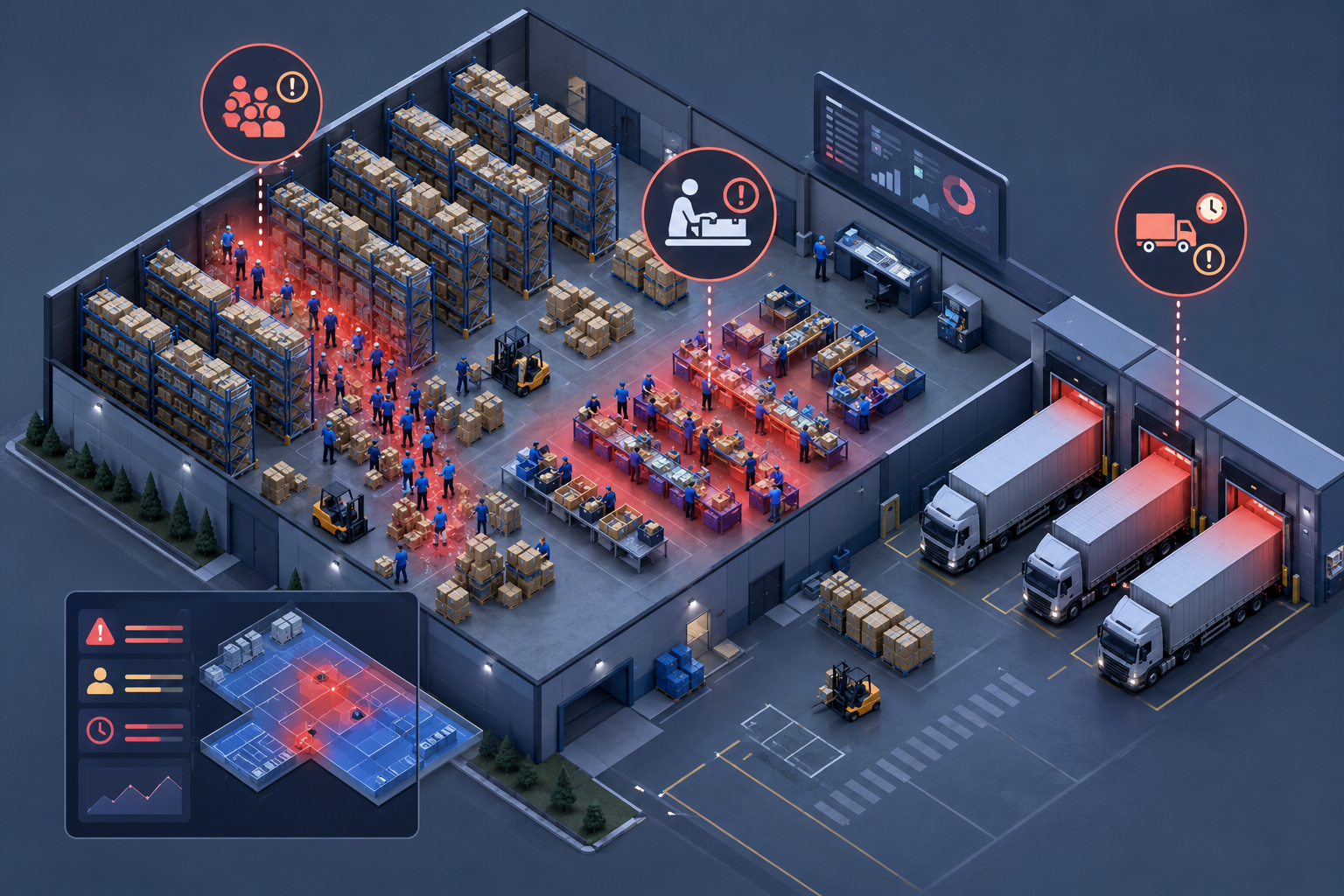
Warehouse directors and operational teams often face a familiar set of challenges when growth outpaces existing processes:
- Limited real-time visibility: Without up-to-the-minute insights into inventory and workflow status, it’s difficult to spot bottlenecks or proactively reallocate resources.
- Manual, error-prone processes: Reliance on spreadsheets, paper checklists, and manual data entry slows operations and increases the risk of mistakes.
- Inefficient space utilization: Suboptimal warehouse layouts and lack of dynamic storage allocation can lead to congestion and underused capacity.
- Poor coordination with transport teams: Delays in loading, unloading, and cross-docking often stem from disconnected systems and communication gaps.
- Difficulty scaling during peak periods: When volumes spike, teams struggle to maintain performance without overtime or temporary hires.
These pain points not only limit throughput but also threaten inventory accuracy and customer satisfaction. The question for warehouse leaders is: how can operations be scaled to meet demand, without adding more people to the payroll?
Best Practices from Leading Nordic Logistics Companies
Industry leaders across Denmark, Norway, and Sweden have pioneered several strategies to address these challenges:
1. Invest in Real-Time Visibility
Top logistics operators deploy warehouse management systems (WMS) that provide a live view of inventory, dock status, and goods movement. This enables proactive decision-making, such as reallocating teams to congested areas or adjusting dock assignments on the fly, without waiting for end-of-day reports.
2. Automate Routine Tasks
Automation is not just about robotics. Many Nordic warehouses have streamlined check-in, storage allocation, and inventory reconciliation using barcode scanning, mobile devices, and integrated software. This reduces manual effort and frees up staff for higher-value tasks.
3. Integrate Warehouse and Transport Systems
Seamless integration between WMS, transport management, and terminal operating systems ensures that warehouse teams are always aligned with incoming and outgoing shipments. This minimizes delays, improves truck turnaround times, and supports just-in-time operations.
4. Use Data to Drive Continuous Improvement
Industry leaders leverage analytics to identify error-prone workflows, retrain staff, and optimize warehouse layouts. By tracking KPIs such as inventory accuracy, storage utilization, and processing times, they can target improvements that deliver measurable results.
5. Design for Flexibility and Scalability
Rather than relying on static processes, successful companies build flexibility into their operations. Modular systems and adaptable workflows allow them to handle volume spikes and changing customer requirements without major system overhauls or new hires.

The Role of Modern WMS in Enabling Scalable Growth
A modern warehouse management system is at the heart of scalable operations. Solutions like PICit’s Cargo Freight Station / Warehouse Management System (WMS) are purpose-built for logistics operators who need to boost throughput and accuracy without increasing headcount.
Key capabilities include:
- Real-time inventory management: Instantly track every item’s location and status, reducing search times and minimizing lost or misplaced goods.
- Activity tracking and reporting: Monitor all warehouse activities, from receiving to dispatch, with automated logs and actionable dashboards.
- Automated storage allocation: Optimize space utilization by dynamically assigning storage locations based on real-time capacity and workflow needs.
- Seamless integration: Connect warehouse operations with transport and terminal systems, ensuring smooth handoffs and coordinated schedules.
- User-friendly interfaces: Empower staff to adopt new processes quickly, reducing training time and resistance to change.
By replacing fragmented, manual processes with a single, integrated platform, warehouse leaders can eliminate bottlenecks, reduce errors, and respond faster to operational challenges.
Key Takeaways for Warehouse Leaders
Scaling warehouse operations without increasing headcount is not only possible, it’s becoming the standard for high-performing logistics companies. The most successful organizations:
- Prioritize real-time visibility and actionable data
- Automate and streamline routine processes
- Integrate warehouse, transport, and terminal systems
- Use analytics to drive continuous improvement
- Choose flexible, user-friendly solutions that adapt to changing needs
By following these best practices and leveraging modern WMS platforms like PICit’s Cargo Freight Station / Warehouse Management System, warehouse directors can achieve ambitious growth targets, maintain high service levels, and build operations that are recognized for performance and scalability.
For those ready to take the next step, the lesson from industry leaders is clear: scalable warehouse operations start with the right technology and a commitment to continuous improvement.