

The Challenge: Fragmented Systems and Hidden Inefficiencies
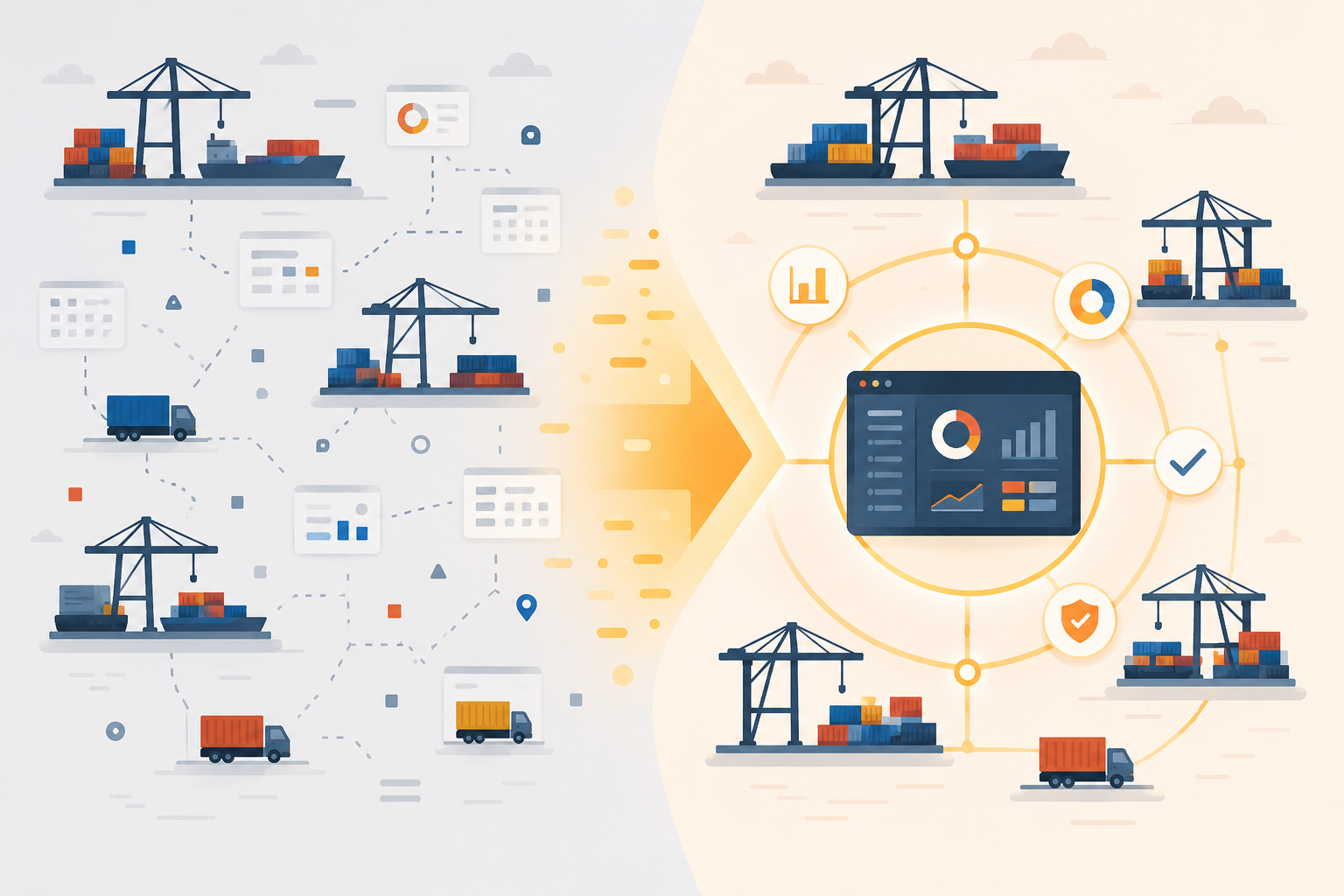
For operations leaders in global port and logistics networks, the pressure to deliver measurable improvements is relentless. As organizations expand across multiple terminals and regions, the complexity of managing performance grows exponentially. Many terminal operators still rely on a patchwork of legacy Terminal Operating Systems (TOS), spreadsheets, and manual reporting. This fragmentation creates data silos, delays, and blind spots that make it nearly impossible to gain a unified view of network performance.
When each terminal operates on its own system, comparing key performance indicators (KPIs) such as throughput, turnaround time, or cost per ton becomes a labor-intensive process. Manual data consolidation is prone to errors and often lags behind real-world events. The result: operational disruptions go undetected until they escalate, and opportunities for improvement remain hidden beneath layers of inconsistent data.
Why Benchmarking Matters for Terminal Networks
Benchmarking is more than just comparing numbers. For multi-terminal operators, it is a strategic tool for driving operational excellence. By systematically measuring and comparing performance across locations, benchmarking uncovers best practices, highlights underperforming areas, and enables targeted interventions.
In a networked environment, even minor inefficiencies can scale into significant challenges. Without standardized metrics and real-time visibility, it is difficult to:
- Identify which terminals are excelling and why
- Pinpoint root causes of bottlenecks or disruptions
- Share proven solutions across the network
- Respond quickly to changing customer demands or regulatory requirements
Benchmarking empowers decision-makers to move from reactive problem-solving to proactive, data-driven improvement. It lays the foundation for a culture of continuous optimization, where every terminal learns from the network as a whole.

Unified Platforms: Unlocking Real-Time, Network-Wide Insights
The transition from fragmented legacy systems to unified SaaS platforms is a game-changer for benchmarking. Modern solutions like PICit’s Terminal Operating System (TOS) are designed to integrate all operational data streams into a single, real-time platform. This unified approach delivers several critical advantages:
- Consistent Data Structures: All terminals report metrics in the same format, eliminating confusion and enabling apples-to-apples comparisons.
- Real-Time Visibility: Operations leaders can monitor KPIs across every location as events unfold, not days or weeks later.
- Automated Reporting: Manual data consolidation is replaced by automated dashboards, freeing up valuable time for analysis and action.
- Scalable Best Practices: Standardized workflows make it easier to roll out successful initiatives across the network.
With a unified platform, benchmarking becomes an ongoing process rather than a periodic project. Leaders can set clear targets, track progress, and adjust strategies based on up-to-date, network-wide intelligence.
From Data Silos to Actionable Metrics: The Role of PICit TOS
PICit’s Terminal Operating System (TOS) is purpose-built for operators managing complex, multi-terminal environments. By integrating real-time container and cargo tracking, vessel call management, and yard operations into a single platform, PICit TOS eliminates the need for manual reporting and fragmented data flows.
Key features that enable effective benchmarking include:
- Operational Visibility: Full transparency into all terminal movements, from gate to yard to vessel.
- Unified KPI Dashboards: Customizable dashboards provide instant access to throughput, turnaround times, dwell times, and more, across every terminal.
- Seamless Integration: EDI and API connections ensure that data from other systems (such as Goods Transport System or Estimate M&R) flows into the central platform without manual intervention.
- Mobile Access: On-site managers and remote executives can access real-time data from any device, supporting rapid response and oversight.
By consolidating operational data, PICit TOS enables leaders to benchmark performance across the network, identify outliers, and drive targeted improvements. For example, if one terminal consistently achieves faster gate turnaround times, its processes can be analyzed and replicated elsewhere. Conversely, persistent delays at another site can be investigated and addressed before they impact customer satisfaction or profitability.
Driving Continuous Improvement: Practical Steps for Operations Leaders
Implementing network-wide benchmarking is not just a technology project, it is a strategic transformation. Operations leaders can take the following steps to maximize the impact:
- Define Standardized KPIs: Establish a core set of metrics that matter most for your network (e.g., container dwell time, cost per ton, disruption response time).
- Unify Data Sources: Migrate from legacy systems and spreadsheets to an integrated SaaS platform like PICit TOS, ensuring all terminals contribute data in a consistent format.
- Automate Reporting: Leverage real-time dashboards to replace manual consolidation, enabling faster and more accurate decision-making.
- Foster a Data-Driven Culture: Encourage teams to use benchmarking insights to identify improvement opportunities and share best practices across locations.
- Iterate and Scale: Use benchmarking results to pilot new initiatives, measure their impact, and roll out successful changes network-wide.
By following these steps, operations leaders can transform benchmarking from a static report into a dynamic engine for continuous improvement.
Conclusion: Building a Culture of Excellence Through Benchmarking
In today’s competitive logistics landscape, operational excellence is not achieved by chance. It requires a commitment to transparency, standardization, and continuous learning. Unified platforms like PICit TOS make network-wide benchmarking practical and powerful, enabling leaders to uncover hidden inefficiencies, replicate success, and respond proactively to emerging challenges.
For organizations managing multiple terminals, the journey from fragmented systems to unified, real-time benchmarking is the key to sustained performance gains. By embracing integrated SaaS solutions, operations leaders can deliver measurable results, higher throughput, lower costs, and faster response times, while building a resilient, data-driven culture that thrives on continuous improvement.