Eliminating Delays, Disruption, and Disconnection at the Operational Edge Discover how...
Introduction: Why Mobility Matters Now
Warehouses are not static environments. Orders change, shipments arrive unexpectedly, and teams must adapt in real time. Yet, in many warehouses, daily execution is still tied to paper lists, wall-mounted screens, or manual updates. These outdated tools can slow teams down and create unnecessary errors.
In 2025, with customer expectations rising and logistics networks under constant pressure, mobility has become a core requirement. Mobile-first warehousing puts information and tasks directly in the hands of the workforce, wherever they are, whenever they need it.
The Limitations of Traditional Task Execution
Paper-Based Workflows
Paper lists remain common, but they are inefficient. When instructions change, teams have to stop, reprint, or rely on verbal updates. Errors multiply, and valuable time is lost.
Static Screens
Many warehouses use large monitors or shared terminals to display task lists. But these require workers to leave their station, check for updates, and return. Every step away from the floor reduces productivity.
Manual Updates
Without mobile tools, completion of tasks often has to be logged manually. This creates delays in reporting, leaving managers with outdated information.
The Cost of Immobility
When mobility is missing from warehouse operations, the impact is felt at every level:
-
Lower Efficiency: Workers waste time walking back and forth to check updates.
-
Increased Errors: Manual task allocation and delayed updates cause mistakes.
-
Reduced Flexibility: Shifts and workflows are harder to adapt when teams don’t have live access to changes.
-
Weaker Visibility: Managers are left without a real-time overview, making proactive planning difficult.
Over time, these costs reduce the warehouse’s ability to respond quickly, keep service levels high, and operate competitively.
What Mobile-First Warehousing Delivers
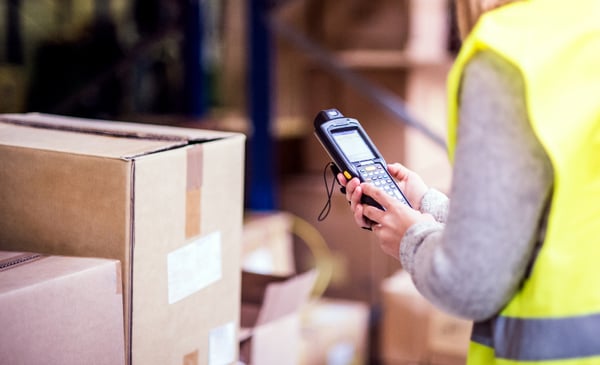
A mobile-first approach places the warehouse system directly in the hands of those who need it most: the workforce. By equipping staff with mobile devices, warehouses can:
Assign Tasks Directly to Handhelds
Jobs are distributed instantly to individuals, reducing miscommunication and removing the need for paper lists.
Enable Real-Time Updates
As tasks are completed, the system is updated automatically. Managers always see the current status, and bottlenecks are easier to identify.
Reduce Interruptions and Errors
Teams no longer have to stop what they are doing to confirm updates. Instructions and confirmations are managed in one place.
Increase Flexibility Across Shifts and Locations
Whether in receiving, picking, or replenishment, mobile tools ensure workers can adapt quickly to changing priorities.
A Day in a Mobile-First Warehouse
Consider a shift in a traditional warehouse:
-
A worker starts with a printed picking list.
-
Mid-shift, a priority order arrives. A supervisor has to track the worker down and relay new instructions.
-
The worker updates the paper manually and hopes no items are missed.
Now compare this to a mobile-first setup:
-
The worker begins with tasks already assigned on a handheld device.
-
A priority order arrives. The new task is pushed instantly to the worker’s device.
-
The system updates automatically as the order is completed, ensuring the manager sees progress in real time.
The difference is not just efficiency, it’s confidence. Everyone trusts the system, because everyone works from the same live data.
Why Mobility Matters in 2025
Warehousing today is defined by uncertainty and customer-driven demands. Whether supporting e-commerce, manufacturing, or distribution, warehouses must operate with agility.
Mobile-first solutions should not be optional. They provide the foundation for:
-
Scalability: Supporting larger order volumes without adding complexity.
-
Resilience: Adapting quickly when disruptions occur.
-
Transparency: Offering customers and partners reliable, accurate updates.
Without mobility, warehouses remain reactive. With it, they become proactive, efficient, and prepared for growth.
Moving From Static to Mobile
Transitioning to mobile-first warehousing is not just about adding new technology. It requires rethinking processes to ensure information flows seamlessly across the operation:
-
Assess Current Workflows: Identify where paper-based routines or manual reporting slow down efficiency.
-
Redesign Processes Around Real-Time Data: Ensure that updates are captured instantly and shared across the warehouse.
-
Integrate With Core Systems: Create a unified flow where task management, inventory, and reporting connect in one system.
-
Enable Teams Through Simplicity: Mobile-first processes should make work easier, guiding staff naturally rather than adding complexity.
-
Measure Performance: Track gains in accuracy, throughput, and responsiveness to validate the impact of mobility.
Conclusion: Bringing the System to the Floor
In the past, warehouse systems sat in the office or on static screens. In 2025, they need to be where the work happens: on the floor, in the hands of the people doing the tasks.
By moving to mobile-first warehousing, companies can:
-
Eliminate paper lists and manual updates
-
Provide teams with live instructions
-
Improve efficiency and accuracy
-
Create a foundation for scalable, resilient operations
Mobility is not an add-on. It is the new standard for efficient warehousing.