Introduction: Dispatchers Deserve Better Tools In haulage operations, few roles are more central,...

Introduction: The High Stakes of Road Freight Operations
In today’s competitive logistics landscape, road freight companies are under constant pressure to deliver reliably, adapt to daily disruptions, and maintain operational efficiency. For operational leaders, the ability to spot early warning signs in their workflows is critical. Recognizing these red flags can mean the difference between staying ahead of challenges and falling behind competitors who have already embraced digital transformation. This article explores five key warning signs that indicate your road freight operations may be overdue for digitalization and how addressing them can unlock new levels of performance and resilience.

Warning Sign 1: Lack of Real-Time Visibility
One of the most significant pain points for operational stakeholders in road freight is the absence of real-time, accurate status updates for ongoing shipments. When managers and dispatchers cannot see where trucks are, which loads are at risk, or how delays are unfolding, they are forced to make decisions based on incomplete or outdated information. This blind spot leads to:
- Missed opportunities to proactively resolve issues
- Increased risk of delivery delays
- Difficulty prioritizing high-impact loads
If your team is still relying on periodic phone check-ins or waiting for drivers to report their status, it’s a clear sign that your current system is not keeping pace with operational demands. Modern digital solutions like PICit’s Transport Order Management System (TOMS) provide real-time visibility across all transport stakeholders, enabling faster, more informed decision-making and reducing operational risk.
Warning Sign 2: Manual Communication Overload
Operational leaders often find themselves ,and their teams,spending an inordinate amount of time on manual coordination. Phone calls, WhatsApp messages, emails, and radio updates are used to relay urgent information between dispatchers, drivers, and customers. While these methods are familiar, they are inherently inefficient and prone to error. Warning signs include:
- High volume of manual calls and messages to manage routine updates
- Important information getting lost or misunderstood
- Delays caused by slow or fragmented communication
When communication becomes a bottleneck, it drains valuable time and mental bandwidth from both office staff and drivers. Digital transport management tools like TOMS embed communication directly into operational workflows, ensuring that updates, confirmations, and changes are instantly visible to everyone who needs them, without the chaos of endless phone calls.
Warning Sign 3: Frequent Replanning and Disruptions
Road freight operations are dynamic by nature. Traffic jams, last-minute customer changes, and unforeseen events require constant adjustment. However, if your team is continuously replanning routes and schedules using spreadsheets or basic TMS tools, it’s a sign that your processes are not robust enough for today’s realities. Common symptoms include:
- Dispatchers scrambling to update plans as new disruptions arise
- Difficulty reallocating fleet resources quickly
- Increased risk of missed deadlines and dissatisfied customers
Digitalization empowers teams to respond to disruptions with agility. With a system like TOMS, dispatchers and managers can instantly adjust plans, reassign resources, and notify drivers in real time. This not only minimizes the impact of disruptions but also helps achieve goals like reducing average delivery delays and increasing planning efficiency.
Warning Sign 4: Disconnect Between Office and Road
A persistent challenge in road freight is the gap between what’s planned in the office and what actually happens on the road. When drivers receive updates late or not at all, or when office staff are unaware of on-the-ground realities, misalignments occur. These disconnects manifest as:
- Drivers missing critical updates about route changes or customer requirements
- Office staff lacking confirmation that instructions have been received and understood
- Increased reliance on personal experience and informal channels to bridge information gaps
Integrated digital platforms eliminate these silos by providing a single source of truth for all operational data. TOMS, for example, offers real-time access via web browser and mobile app, ensuring that both office teams and drivers are always aligned and informed.
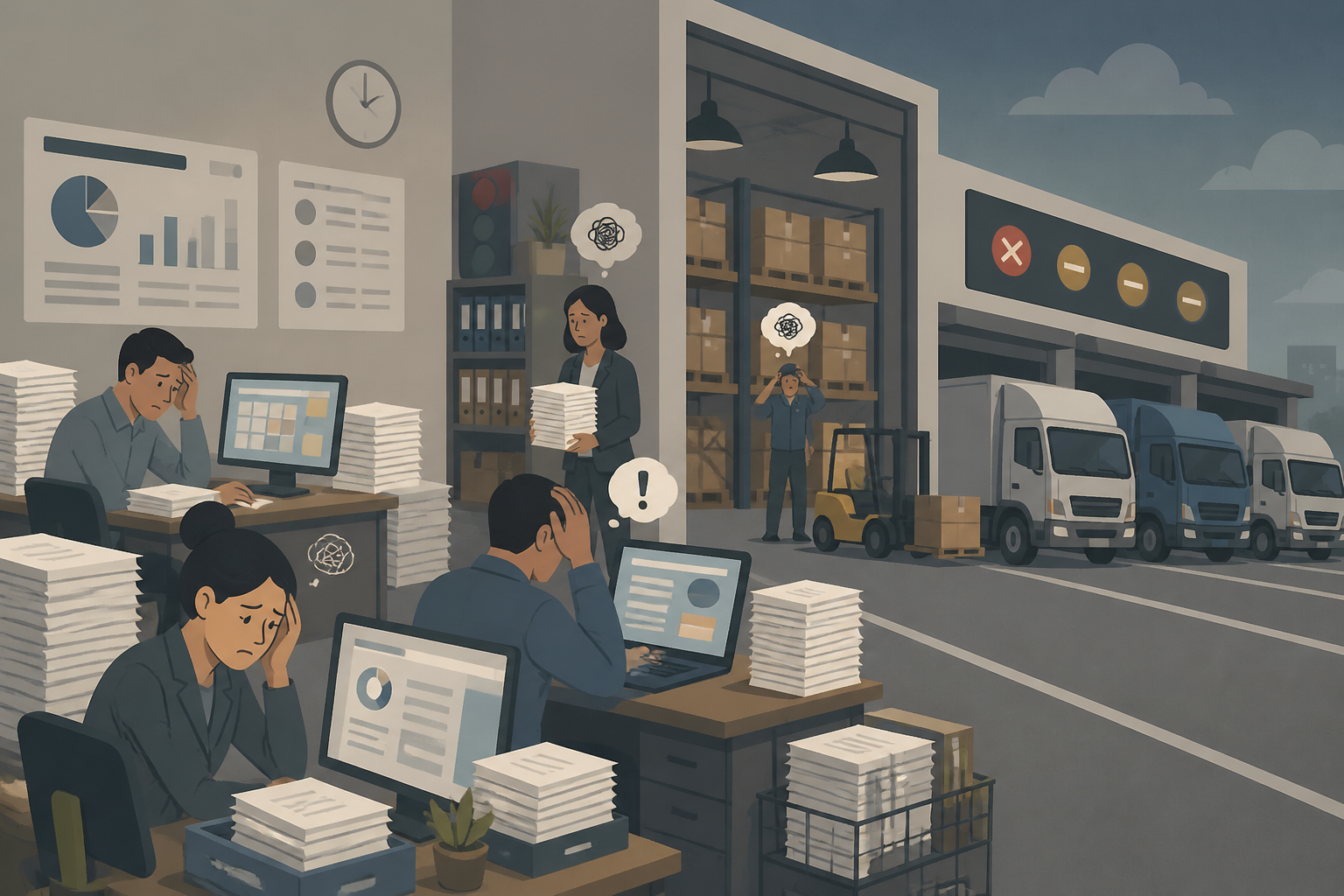
Warning Sign 5: Operational Stress and Bottlenecks
Intense pressure during peak periods is a reality for most road freight operations. However, when stress levels are consistently high and bottlenecks are frequent, it’s often a symptom of outdated or fragmented workflows. Warning signs include:
- Employees reporting high stress due to constant firefighting
- Reactive, last-minute problem-solving becoming the norm
- Difficulty scaling operations without increasing errors or delays
Digitalization is not just about efficiency, it’s about creating a more sustainable and resilient work environment. Solutions like TOMS automate routine coordination, streamline communication, and provide the tools needed to manage complexity with confidence. The result is lower employee stress, fewer avoidable delays, and a foundation for continuous improvement.
Taking the Next Step: Embracing Digital Transport Management
If any of these warning signs sound familiar, it may be time to assess your current workflows and consider the benefits of digital transformation. Modern transport management systems like PICit’s TOMS are designed specifically for the realities of road freight, offering:
- End-to-end digitalization from order to invoice
- Real-time visibility and communication for all stakeholders
- Seamless integration with existing logistics systems
- Proven reliability in high-pressure, time-sensitive scenarios
By proactively addressing operational pain points, managers can move from reactive problem-solving to strategic leadership - freeing up time, reducing risk, and delivering better outcomes for customers and teams alike. The journey to digitalization starts with recognizing the signs. The next step is taking action.