

The Cost of Fragmented Communication in Terminal Operations
In the fast-paced world of port terminals, operational reliability is everything. Yet, many terminals still rely on a patchwork of radios, phone calls, spreadsheets, and siloed software to coordinate vessel arrivals, yard activities, and cargo flows. This fragmented approach to communication is more than just an inconvenience, it is a direct threat to throughput, efficiency, and reputation.
When teams lack a unified real-time overview of cargo, equipment, and labor, small issues can quickly escalate. A missed update on a vessel’s ETA, a delayed crane allocation, or a miscommunicated gate assignment can ripple through the operation, causing bottlenecks, idle equipment, and frustrated partners. For terminal operators under constant pressure to move more cargo faster, without increasing costs, these inefficiencies are unsustainable.
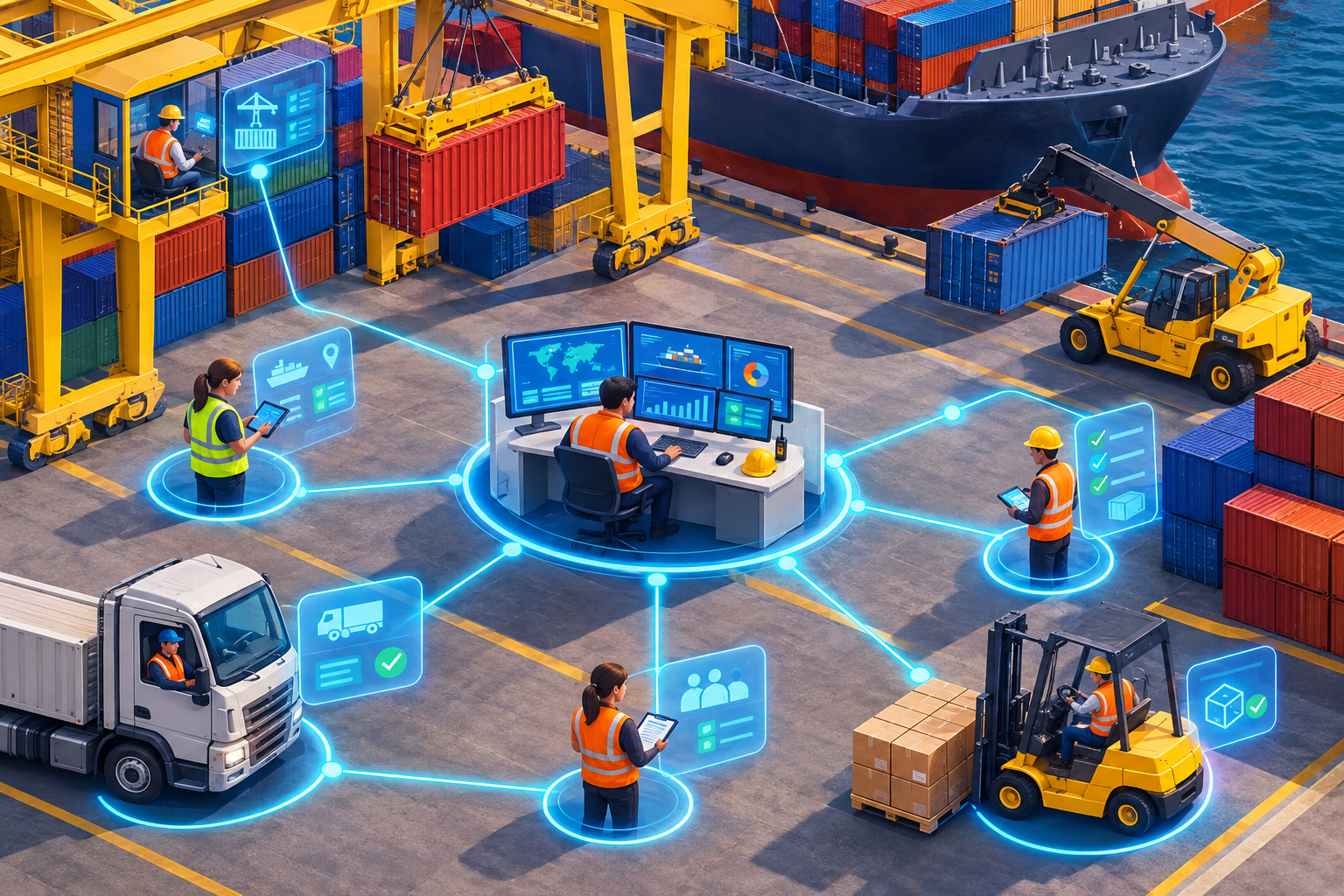
Unified Collaboration: The Foundation for Reliable Cargo Throughput
Operational excellence in terminal management depends on seamless collaboration, both within internal teams and with external partners such as shipping lines, hauliers, and customs authorities. Unified communication is not just about convenience; it is about creating a single source of truth that enables everyone to act on the same, up-to-date information.
When all stakeholders, yard managers, stevedores, vessel planners, truck dispatchers, and external agents, work from a shared platform, the risk of misalignment drops dramatically. Real-time visibility into cargo locations, equipment status, and labor allocation means teams can anticipate issues before they become delays. This proactive approach transforms the terminal from a reactive environment into a coordinated, high-performing operation.

Building the Business Case for Integrated Communication Platforms
The business impact of fragmented communication is measurable. Delays in vessel turnaround, increased dwell times, and inefficient resource allocation all translate to higher costs and missed revenue opportunities. Conversely, terminals that invest in integrated communication platforms consistently report:
- Reduced vessel turnaround times
- Increased cargo throughput without proportional labor increases
- Fewer operational delays caused by miscommunication
- Improved customer satisfaction and stronger relationships with shipping lines
For decision-makers, the case is clear: better collaboration is not a luxury, it is a necessity for sustainable growth and competitiveness.
How PICit’s Terminal Operating System (TOS) Enables Seamless Teamwork
PICit A/S understands the realities of port operations. The Terminal Operating System (TOS) is designed to break down silos and provide full operational visibility across all terminal movements. By integrating real-time container and cargo tracking, vessel call management, and yard operations into one platform, TOS eliminates the need for manual reporting and fragmented updates.
Key features that drive collaboration include:
- Real-time move reporting: All teams have instant access to the latest status of cargo, equipment, and vessel operations.
- Integration with external partners: Shipping lines, hauliers, and customs authorities can access relevant information through secure, role-based portals, reducing the need for phone calls and emails.
- Mobile and tablet support: Supervisors and managers can coordinate operations from anywhere in the terminal, ensuring rapid response to changing conditions.
- Seamless EDI and data exchange: Automated data flows reduce manual entry and the risk of errors, keeping everyone aligned.
By connecting the dots between teams and partners, TOS empowers terminals to move from reactive firefighting to proactive management.
Real-World Impact: From Bottlenecks to Breakthroughs
Consider a typical scenario: a vessel arrives earlier than scheduled, but the yard team is not updated in real time. Cranes are still allocated to another operation, and trucks begin to queue at the gate. The result is congestion, idle equipment, and a scramble to reallocate resources, often managed through hurried phone calls and manual updates.
With an integrated TOS, the vessel’s ETA update is immediately visible to all relevant teams. Yard managers can dynamically adjust crane and labor assignments, truck dispatchers can stagger arrivals, and external partners receive automated notifications. The operation flows smoothly, bottlenecks are avoided, and the terminal maintains its reputation for reliability.
Terminals using PICit’s TOS have reported significant reductions in operational delays and measurable improvements in throughput. By unifying communication, they have transformed their ability to deliver on customer expectations, even as cargo volumes and complexity increase.
Next Steps: Laying the Groundwork for Terminal Growth
For terminal operators seeking to boost efficiency and reliability, the path forward is clear. Investing in unified communication platforms like PICit’s Terminal Operating System is not just about technology, it is about enabling people to work together more effectively.
By fostering seamless collaboration between internal teams and external partners, terminals can:
- Achieve real-time operational visibility
- Reduce delays and unplanned costs
- Increase cargo throughput without adding complexity
- Build stronger relationships with shipping lines and logistics providers
The future of terminal growth depends on breaking down communication barriers. With the right tools and a commitment to integrated operations, port teams can deliver the reliability and performance that today’s logistics landscape demands.