
The New Standard: Real-Time Visibility in Modern Logistics In today’s fast-paced logistics...

Introduction: The Real Cost of Delivery Delays in Haulage
In the world of road freight, delivery delays are more than an inconvenience, they can erode customer trust, inflate operational costs, and put immense pressure on teams. For haulage managers, every late delivery is a signal that something in the workflow needs attention. Understanding the root causes of these delays is the first step toward building a more resilient, responsive operation.
This article breaks down the five most common operational and communication pitfalls that lead to delivery delays in haulage. It also explores why digitalizing workflows is crucial for overcoming these challenges and achieving the reliability that customers demand.
Manual Processes and Workflow Bottlenecks
Despite advances in logistics technology, many haulage operations still depend on manual processes for planning, tracking, and coordination. Spreadsheets, paper-based checklists, and ad-hoc phone calls remain common, especially during peak periods. These manual methods introduce bottlenecks at every stage:
- Slow Order Processing: Entering and updating orders by hand increases the risk of missed details and duplicate work.
- Inefficient Resource Allocation: Without automated tools, matching trucks and drivers to changing requirements becomes a time-consuming puzzle.
- Delayed Issue Resolution: When disruptions occur, it takes longer to identify, communicate, and act on the problem.
The result is a reactive environment where teams are constantly firefighting instead of proactively managing the flow of goods. Manual processes not only slow down operations but also make it difficult to scale or adapt quickly to new demands.
Communication Gaps Between Dispatch, Drivers, and Customers
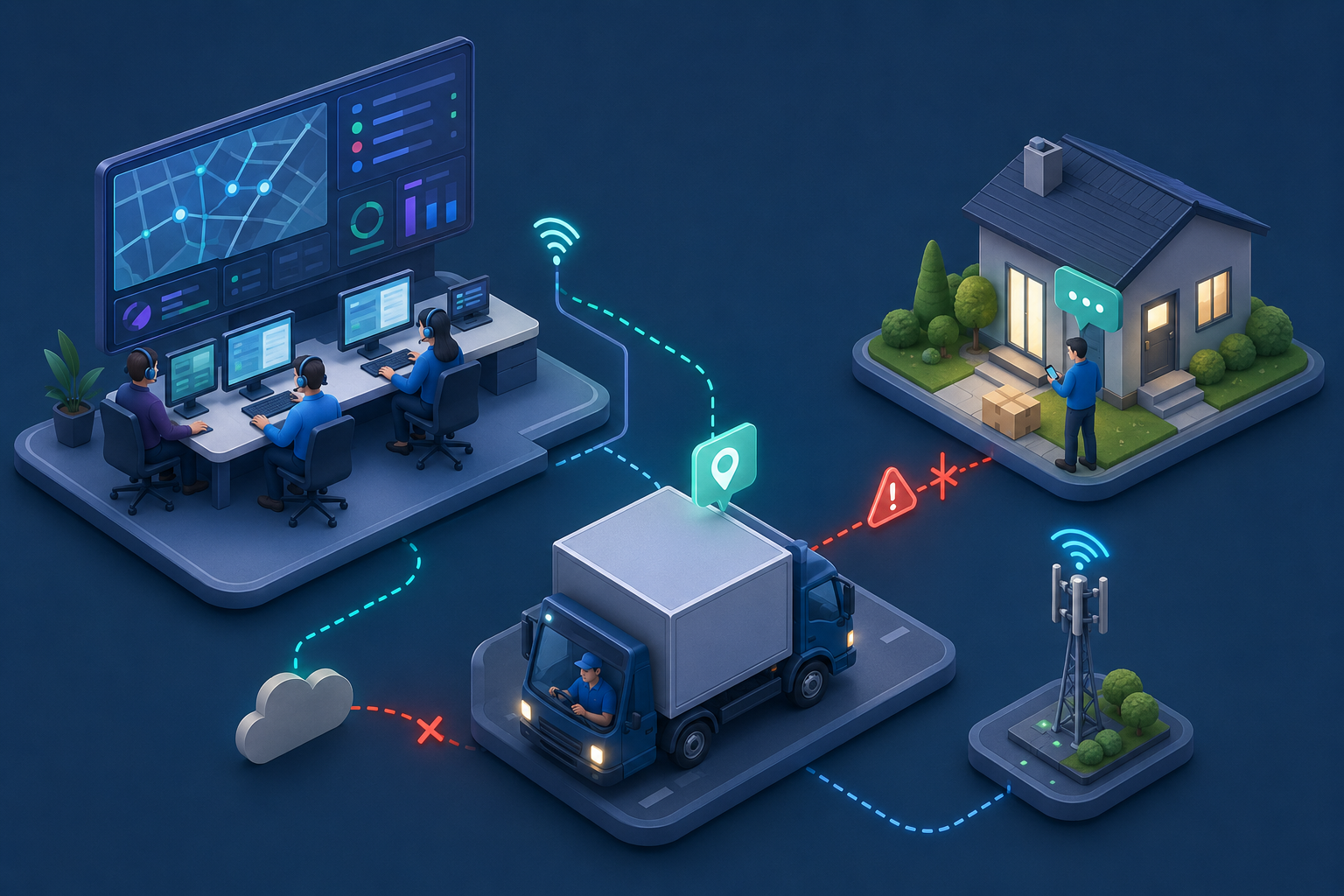
Effective haulage management depends on seamless communication among dispatchers, drivers, and customers. However, in many organizations, communication is fragmented across phone calls, text messages, emails, and informal chats. This creates several pain points:
- Missed or Delayed Updates: Critical information about route changes, customer requirements, or traffic incidents can be lost or delayed if not shared through a unified channel.
- Inconsistent Messaging: Drivers may receive conflicting instructions from different sources, leading to confusion and mistakes.
- Customer Frustration: Without real-time updates, customers are left in the dark about delivery status, increasing the risk of complaints and lost business.
Communication gaps are a leading cause of avoidable delays. They also contribute to higher stress levels among staff, who must constantly chase information and clarify misunderstandings.
Reactive Replanning and Lack of Real-Time Visibility
Transport plans rarely survive contact with reality. Traffic jams, last-minute customer changes, and unforeseen disruptions are daily occurrences. For haulage managers, the ability to replan quickly is essential, but without real-time visibility, this becomes a major challenge.
- Blind Spots: When managers and dispatchers lack up-to-date information on vehicle locations and order status, they cannot make informed decisions.
- Slow Response: By the time an issue is discovered through manual checks or driver calls, it may already be too late to prevent a delay.
- Escalation of Problems: Small disruptions can snowball into larger issues if not addressed promptly and collaboratively.
Real-time visibility is not just a convenience, it is a competitive differentiator that reduces operational risk and enables proactive management.
Fragmented Tools and Data Silos
Many haulage operations rely on a patchwork of legacy systems, spreadsheets, and standalone applications. This fragmentation creates data silos and complicates day-to-day coordination:
- Duplicated Effort: Teams must enter the same information into multiple systems, increasing the risk of errors.
- Inconsistent Data: Discrepancies between tools can lead to confusion about which information is accurate or up to date.
- Limited Insight: Without integrated data, managers struggle to analyze performance, identify bottlenecks, or plan improvements.
Fragmented tools not only slow down daily workflows but also hinder long-term optimization and growth.
Human Error and Stress Under Pressure
Haulage is a high-pressure environment, especially during peak periods or when disruptions occur. Manual processes and fragmented communication put additional strain on staff, increasing the likelihood of human error:
- Missed Deliveries: Simple mistakes, such as entering the wrong address or miscommunicating a schedule change, can result in costly delays.
- Burnout: Constantly reacting to problems and juggling multiple tools leads to fatigue and decreased morale.
- Reduced Performance: High stress levels make it harder for teams to maintain focus and deliver consistent results.
Reducing the cognitive load on staff is essential for both operational performance and employee well-being.
Digitalizing Workflows: The Path Forward for Haulage Managers
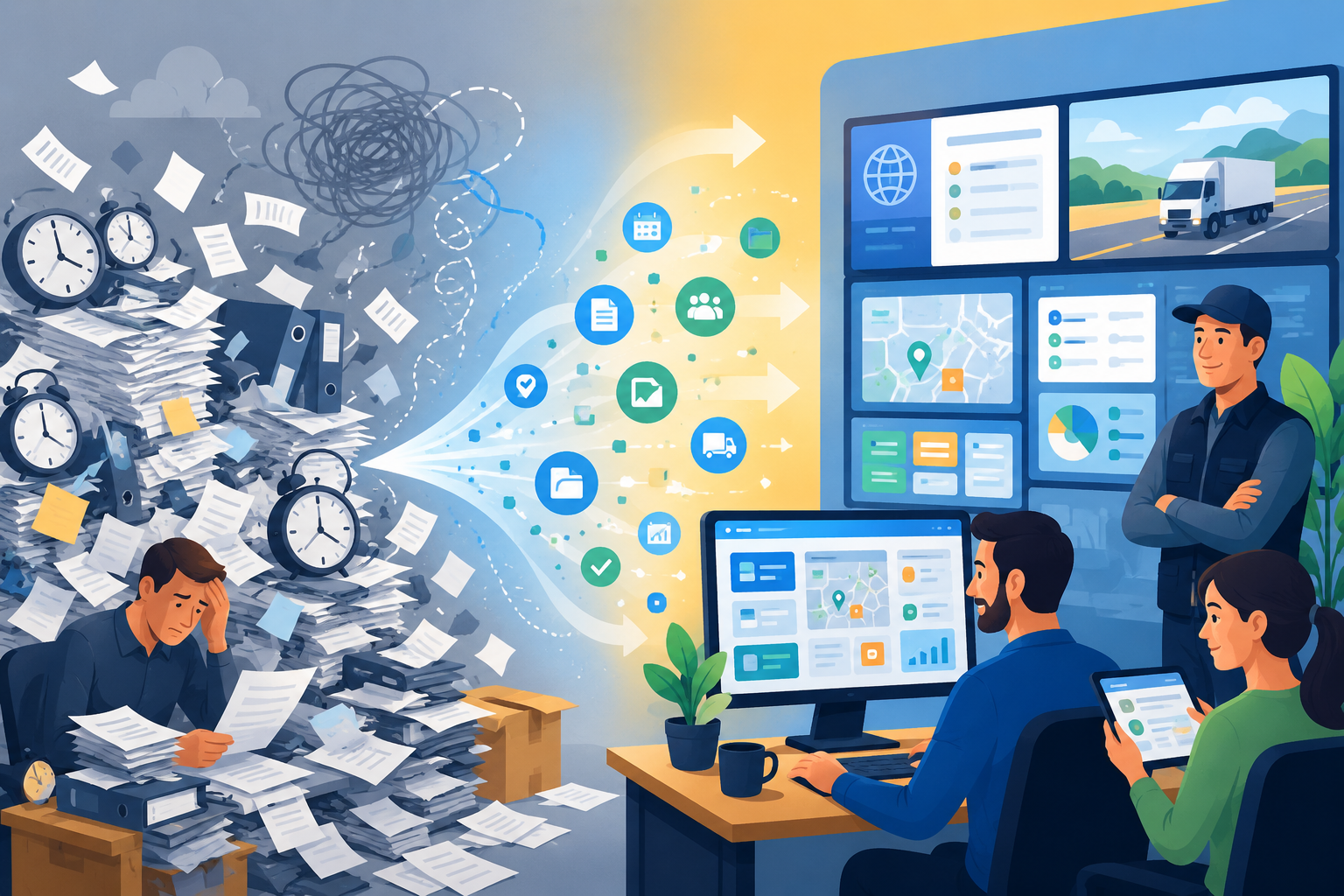
Addressing these delay drivers requires more than incremental tweaks, it calls for a fundamental shift toward digitalized, integrated workflows. Modern solutions like the Transport Order Management System (TOMS) from PICit A/S are designed specifically for the realities of haulage management:
- End-to-End Workflow Digitalization: TOMS replaces paper, spreadsheets, and ad-hoc messaging with a single platform for order creation, dispatch, tracking, and invoicing.
- Real-Time Visibility: Managers, dispatchers, and drivers access up-to-date information from any device, enabling faster, data-driven decisions.
- Integrated Communication: Built-in messaging and notifications ensure that all stakeholders receive timely, consistent updates, reducing miscommunication and delays.
- Automated Coordination: Routine tasks such as order assignment, time registration, and status updates are streamlined, freeing up staff to focus on exceptions and value-added activities.
- Seamless Integration: TOMS connects with other PICit solutions like the Terminal Operating System (TOS) and Goods Transport System (GTS), breaking down data silos and supporting multimodal operations.
By digitalizing workflows, haulage managers can move from reactive problem-solving to proactive performance management. The result is fewer delays, higher customer satisfaction, and a more resilient operation.
Conclusion: Turning Delay Drivers into Efficiency Wins
Delivery delays are not inevitable. By understanding the operational and communication pitfalls that cause them, haulage managers can take targeted action to improve reliability and efficiency. Digitalizing workflows with solutions like PICit’s TOMS empowers teams to overcome manual bottlenecks, close communication gaps, and gain the real-time visibility needed to thrive in today’s fast-paced logistics landscape.
The path to fewer delays starts with a commitment to integrated, digital-first operations. For haulage managers ready to lead this change, the benefits extend far beyond on-time deliveries, they include happier teams, loyal customers, and a stronger bottom line.